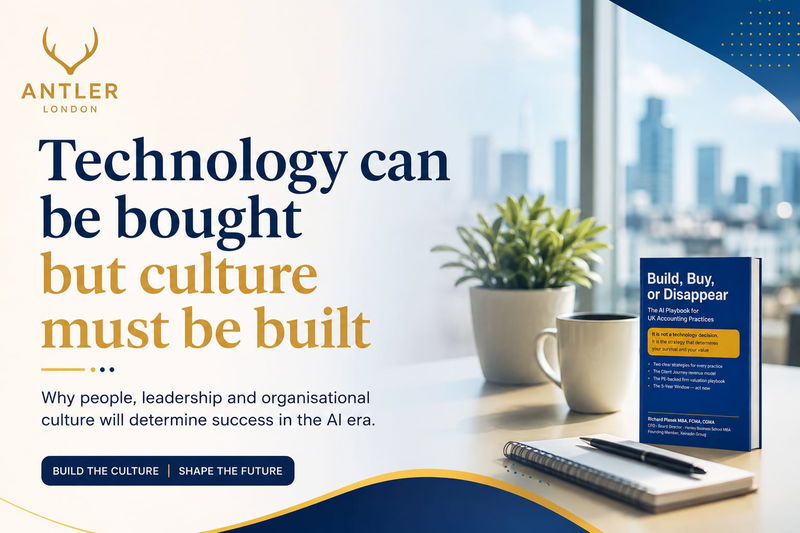
Technology Can Be Bought, But Culture Must Be Built

Artificial intelligence has become one of the biggest talking points in the accounting profession. Every week introduces new AI powered tools, automation platforms and digital solutions designed to improve efficiency. As a result, many accounting firms are asking the same question:
Which AI tool should we invest in?
While technology is important it may not be the most important conversation leaders should be having.
The real challenge isn't choosing the right software. It's preparing people for change, building a culture that embraces innovation and ensuring teams have the confidence to work alongside new technologies. Technology can be purchased in a matter of days but changing how people think and work takes much longer.
The Wrong Conversation
Many firms begin their AI journey by comparing features, pricing and software capabilities. Although these decisions matter they often overlook a more important question:
Is the organisation ready for change?
Even the best technology cannot create lasting results if employees are reluctant to adopt it or if AI is treated as a short term project rather than a long term business strategy. Successful transformation starts with people not platforms.
Beyond the AI Stereotype
One of the biggest misconceptions surrounding AI is that it exists to replace professionals. This belief creates unnecessary fear and slows adoption.
In reality, AI is most valuable when it automates repetitive work, allowing accountants to focus on higher value activities such as client advisory, problem solving, and strategic decision making. The future of accounting isn't about replacing people, it's about helping professionals spend more time where they create the greatest value.
Every Team Responds Differently
No two employees respond to change in the same way. Some are eager to experiment with new technology while others prefer to wait until they feel more confident. A few may resist change altogether.
Recognising these differences is essential for leaders. Instead of expecting everyone to adapt at the same pace, firms should invest in learning, mentoring and open communication. Creating a supportive environment often delivers better results than forcing rapid adoption.
Building an AI Ready Culture
Technology alone doesn't create innovation. Culture does.
AI fluency should become part of everyday learning rather than being limited to technical specialists. Employees don't need to become AI experts but they should feel comfortable understanding where AI adds value, where human judgement is essential and how both can work together effectively.
When continuous learning becomes part of a firm's culture, adapting to future technologies becomes much easier.
Rethinking Talent and Career Growth
The AI era also challenges traditional ideas about career progression. In the past, advancement often depended on years of experience. Today, organisations increasingly value adaptability, curiosity, collaboration and the ability to solve new problems.
Some of the strongest contributors to innovation may not hold senior positions. They are often the people willing to experiment, improve processes and help colleagues embrace change. Firms that recognise and develop this hidden talent create stronger and more resilient teams.
Reward the Right Behaviours
Culture is shaped by what organisations choose to reward.
If innovation and continuous improvement are discussed but never recognised through promotions, leadership opportunities or performance reviews, meaningful change is unlikely to happen.
Instead firms should celebrate employees who share knowledge, improve workflows, mentor colleagues and contribute ideas that strengthen the business. These behaviours create a culture where innovation becomes part of everyday work rather than a one time initiative.
The Bottom Line
The future of accounting will not be defined solely by the AI tools firms purchase. It will be shaped by how effectively leaders prepare their people, encourage continuous learning, and build cultures that embrace change.
Technology can improve efficiency but culture determines whether that technology creates lasting business value. Firms that invest in both people and innovation will be better positioned to succeed in an increasingly competitive profession.
For those interested in exploring these ideas further, Build, Buy and Disappear by Richard Plasek provides a broader strategic perspective on how accounting firms can prepare for the AI era while building long term value.

Comments
No comments yet. Be the first to comment!