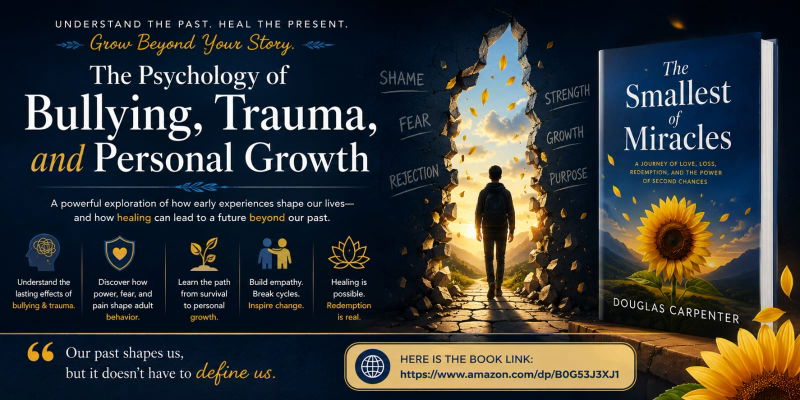
The Psychology of Bullying, Trauma, and Personal Growth

Bullying is often dismissed as an unfortunate part of growing up, a difficult phase that children eventually leave behind. Yet psychologists have long recognized that the effects of bullying can extend far beyond the classroom, influencing how people think, relate to others, and respond to life's challenges well into adulthood.
While some individuals emerge from adversity with greater resilience, others carry invisible emotional scars that shape their confidence, relationships, ambitions, and even their moral choices. Understanding the psychology of bullying, trauma, and personal growth helps us recognize not only how early experiences influence adult behavior but also why healing is possible.
Bullying Is More Than a Childhood Experience
Bullying is not simply about playground conflicts or teasing. It involves repeated behavior intended to intimidate, humiliate, isolate, or control another person. Whether physical, verbal, relational, or increasingly digital through cyberbullying, its impact reaches far beyond the immediate moment.
Research in developmental psychology suggests that prolonged exposure to bullying can alter how individuals perceive themselves and the world around them. Children who are repeatedly rejected or humiliated often begin to internalize those experiences. They may grow up believing they are unworthy, powerless, or destined to remain outsiders.
These beliefs can quietly influence major life decisions from the careers people pursue to the relationships they build and the risks they are willing to take.
The Lasting Effects of Childhood Trauma
Not every difficult childhood experience results in trauma but persistent bullying can become a form of emotional trauma particularly when children feel unsupported or unable to escape their circumstances.
Trauma affects more than memories. It can shape the brain's stress response, making people more sensitive to rejection, criticism, or perceived threats. As adults, some may struggle with anxiety, perfectionism, social withdrawal, or an overwhelming desire for approval.
Others respond differently.
Instead of retreating, they seek control.
They may become intensely competitive, emotionally guarded, or determined to achieve positions of influence where they never have to feel powerless again. Success can become more than an ambition it becomes protection against reliving the vulnerability of childhood.
This helps explain why two people with similar experiences can follow entirely different paths. Trauma does not dictate destiny but it often influences the strategies people develop to navigate life.
When Victims Become Perpetrators
One of psychology's most uncomfortable truths is that pain can sometimes be passed from one person to another.
While the vast majority of people who experience bullying do not become bullies themselves, some individuals adopt harmful behaviors as a way of regaining a sense of power or belonging. Rather than processing their own pain, they redirect it toward someone they perceive as weaker.
This does not excuse harmful actions but it does help explain how cycles of aggression can develop.
Psychologists often emphasize an important distinction like understanding behavior is not the same as justifying it.
People remain responsible for their choices regardless of the experiences that shaped them. Recognizing the roots of harmful behavior simply provides a more complete understanding of how those behaviors emerge and how they might be changed.
Why Power Can Feel Like Safety
Many adults who experienced rejection or humiliation during childhood become highly motivated to achieve success. On the surface, this ambition can appear admirable but beneath it may lie a deeper psychological need.
Power often creates distance from vulnerability.
Financial success, professional status, authority, or social influence can provide a sense of security that was missing during childhood. For some these achievements are healthy expressions of growth. For others they become emotional armor designed to prevent future rejection.
The challenge is that external success rarely heals internal wounds on its own.
Without confronting unresolved trauma people may continue seeking validation through accomplishments while never feeling genuinely secure. This can lead to strained relationships, emotional isolation, and an ongoing fear of losing the identity they have worked so hard to build.
The Possibility of Personal Growth
Although childhood experiences leave lasting impressions, psychology also offers a hopeful perspective: people are remarkably capable of change.
Personal growth begins with awareness.
Recognizing how past experiences influence present behavior allows individuals to make more intentional choices rather than simply repeating old patterns. Therapy, supportive relationships, self reflection, and emotional education all contribute to building healthier ways of responding to life's challenges.
Growth does not mean forgetting painful experiences.
Instead, it involves learning to interpret them differently. A person who once believed they were defined by rejection may gradually discover that those experiences shaped them without determining their future.
This shift from being controlled by the past to learning from it is often where genuine healing begins.
Seeing the Person Behind the Actions
Scientific research helps explain how trauma affects the brain and behavior, but stories offer something equally valuable that is empathy.
Through literature, readers can experience the emotional complexity behind difficult choices. They can witness how shame, fear, loneliness, ambition, and compassion collide within a single character. Stories remind us that human beings rarely fit neatly into categories of "good" or "bad."
Instead, they reveal people as they truly are complex, contradictory, and capable of both causing harm and seeking redemption.
This perspective encourages readers to move beyond quick judgments and ask deeper questions about accountability, forgiveness, and the possibility of change.
Looking Beyond Labels
Whether someone was bullied, became a bully, or witnessed bullying without knowing how to respond, those experiences often remain part of their personal story. The challenge is deciding what role those experiences will continue to play.
Will they become lifelong burdens?
Will they fuel the desire for control?
Or can they become the foundation for greater empathy, resilience, and personal growth?
Psychology suggests that while the past cannot be rewritten the meaning we assign to it can evolve. Growth is rarely immediate and healing is seldom linear but both remain possible when people are willing to confront difficult truths about themselves and their experiences.
These questions continue to shape conversations in psychology, education, and mental health and they also inspire meaningful works of fiction that explore the emotional realities behind them.
One such example is Douglas Carpenter's The Smallest of Miracles. Rather than offering simple heroes or villains, the novel examines how childhood bullying, trauma, shame, power, and accountability can shape a person's life across decades. Through its morally complex characters and psychological depth it invites readers to reflect on a timeless question that is Can confronting the past become the first step toward genuine redemption?

Comments
No comments yet. Be the first to comment!